How Clean Agents Suppress Fires While Limiting Asset Damage
Clean-agent systems can reach extinguishing concentrations in 10 seconds or less, suppressing fires by absorbing heat or interrupting combustion. That makes fire suppression with minimal asset damage a practical consideration for spaces where water could harm electronics, art, or musical instruments. The agent’s speed and clean discharge can limit the damage caused by suppression, while the system’s design must suit the room and its fire risks.
It’s understandable to focus on stopping the flames quickly. But protecting valuable assets also means considering what the suppression method leaves behind and how it affects the environment. Novec 1230 has zero ozone-depletion potential and a global-warming potential of one.
This article explains how clean agents act, what their environmental properties mean, and why they can be appropriate for sensitive assets. It also explores the role of Novec 1230 in fire suppression, so you can understand the balance between rapid response, asset preservation, and environmental impact.
Key Takeaways
- Understand how detection, activation, and agent release work together, and which design factors shape a system’s response.
- Compare clean agents by their environmental properties, not just their fire-suppression function.
- Identify why electronics, artwork, and musical instruments may need protection that avoids water and residue.
- Learn what Novec 1230 systems require from a protected room and how SAO Fire Innovations’ Total Loss Minimization technology relates to asset preservation.
How fast does a clean agent system work?
Clean agent systems can reach extinguishing concentrations in 10 seconds or less after discharge begins. That interval differs from a total-flooding system’s activation delay, which typically ranges from 30 seconds to 2 minutes. Detection, alarm, evacuation, and release sequencing shape the full response.
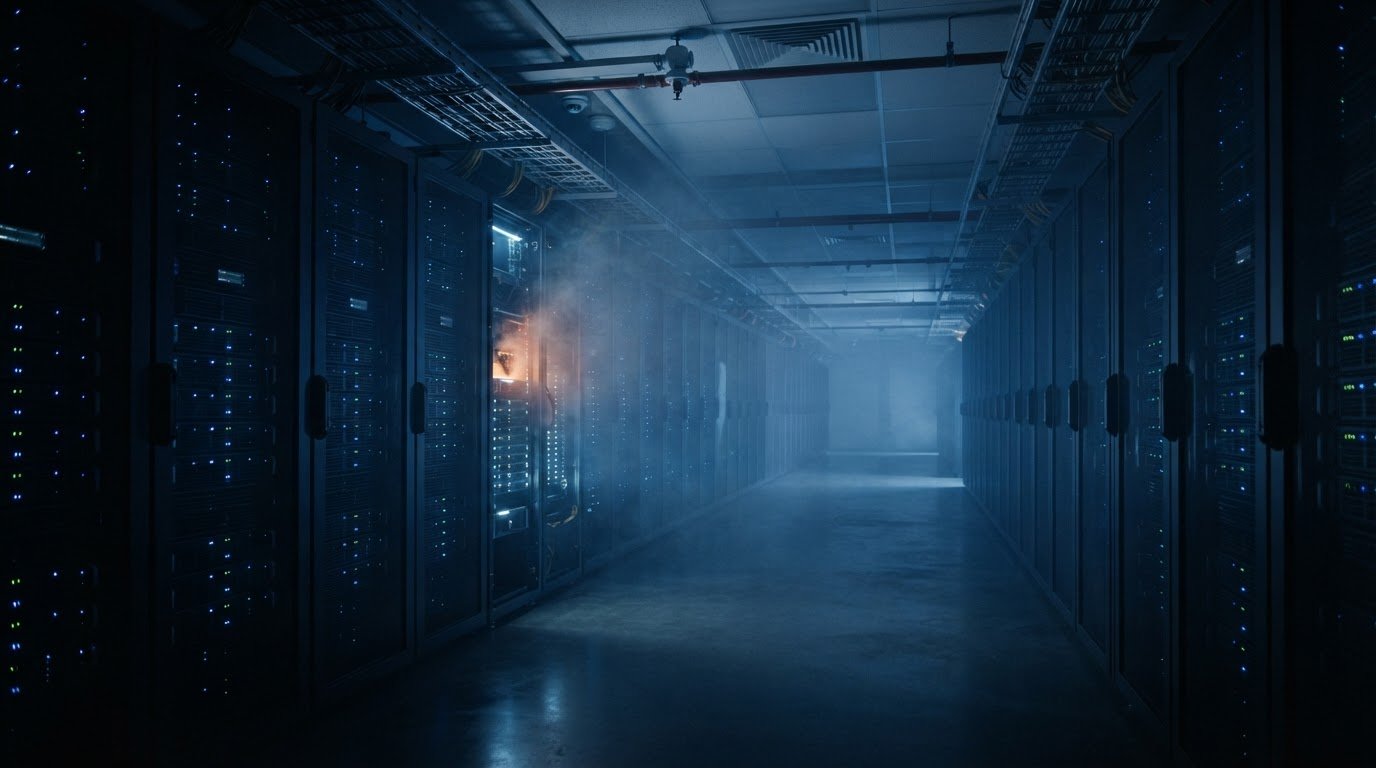
Fire detection and suppression can limit damage by detecting smoke or heat early and releasing an agent suited to the space. In data centers, museums, and industrial equipment rooms, clean agents can suppress flames without leaving water residue on servers, artworks, or machinery.
Choose suppression systems around the facility’s hazards, contents, occupancy, and applicable codes. NFPA 13 covers sprinkler systems, while NFPA 2001 addresses clean agent systems; local authorities having jurisdiction determine applicable requirements. Water-based sprinkler systems can control fire, but discharged water may damage electronics or collections. A clean agent may fit sensitive rooms, while other hazards may require different protection.
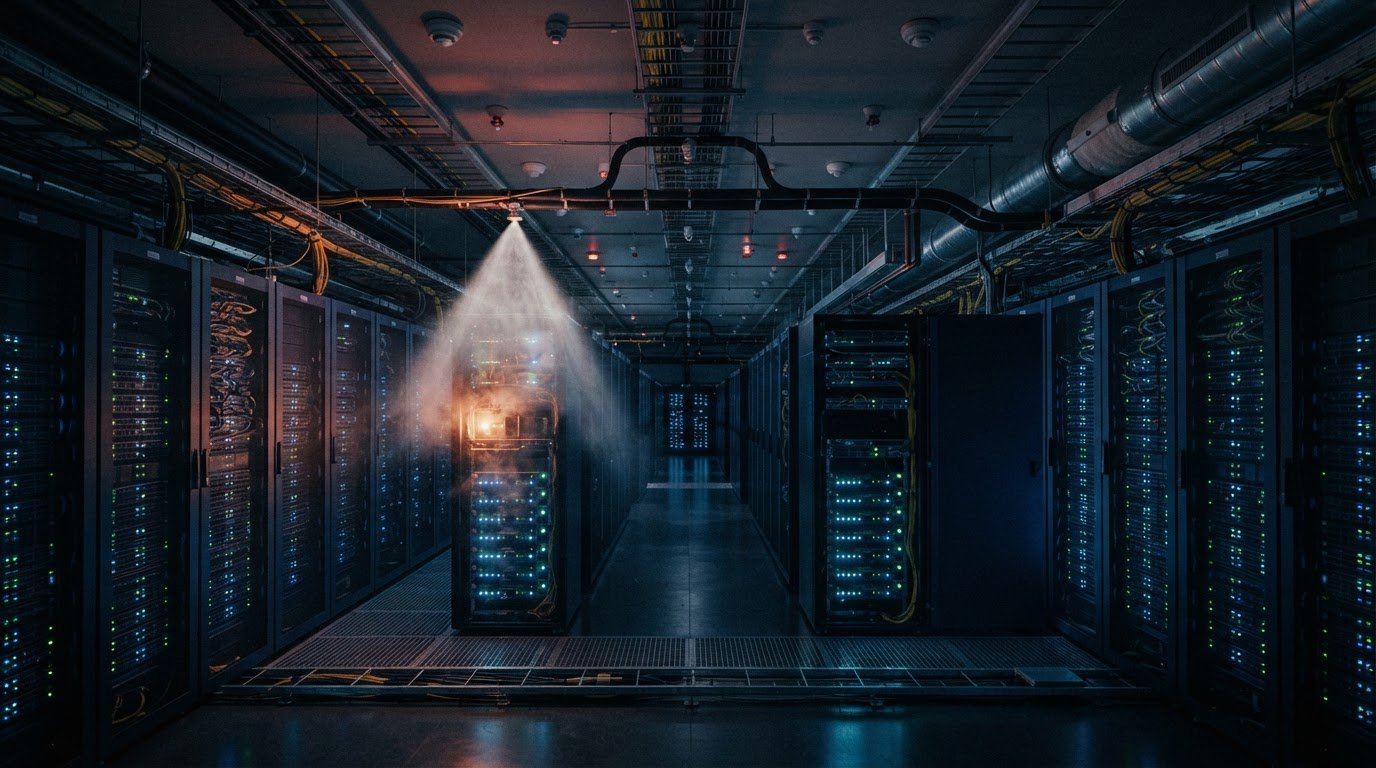
A suppression system links detection to agent release. Sensors detect smoke or heat, a control panel processes the signal, and pipes deliver the agent through strategically placed nozzles. Nozzle coverage, room volume, obstructions, and enclosure integrity all affect whether the agent reaches the required concentration. Engineers must also account for alarms and safe evacuation.
The U.S. American Innovation and Manufacturing (AIM) Act was signed into law in 2020, according to the U.S. Environmental Protection Agency. That date matters when evaluating agents and environmental policy, but it doesn’t replace fire-code requirements. System selection must address both the hazard and the governing standards.
Installation is only one stage. Commissioning tests should confirm detection, control-panel operation, discharge sequencing, and room integrity. NFPA 25 calls for quarterly and annual inspections of fire protection equipment. Routine maintenance checks sensors, cylinders, control panels, and mechanical components; changing room layouts can also affect coverage and performance.
For fire suppression with minimal asset damage, response speed matters as much as agent choice, nozzle placement, and maintenance. A system works as a coordinated design, not as a cylinder acting alone.
Environmental properties of clean agents
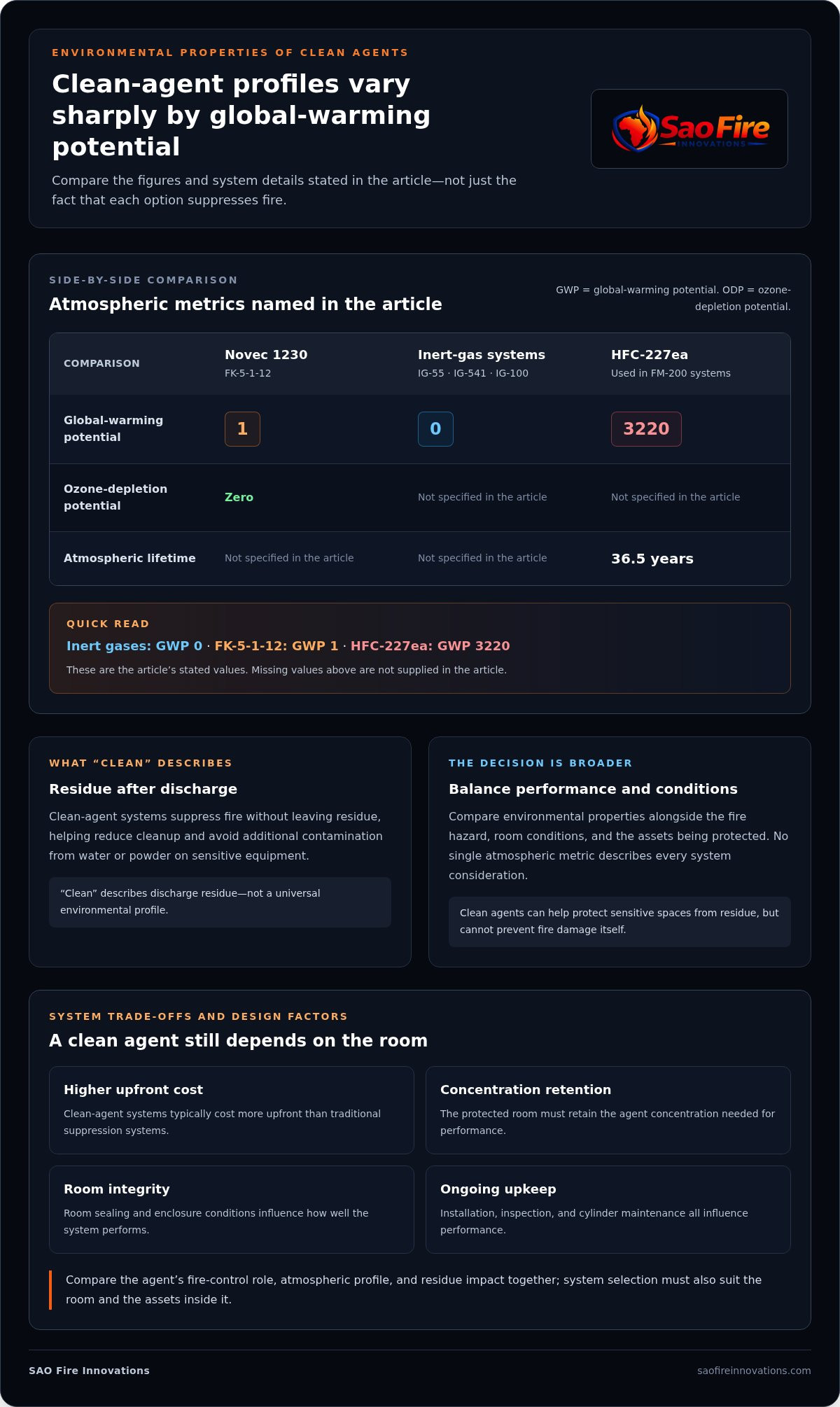
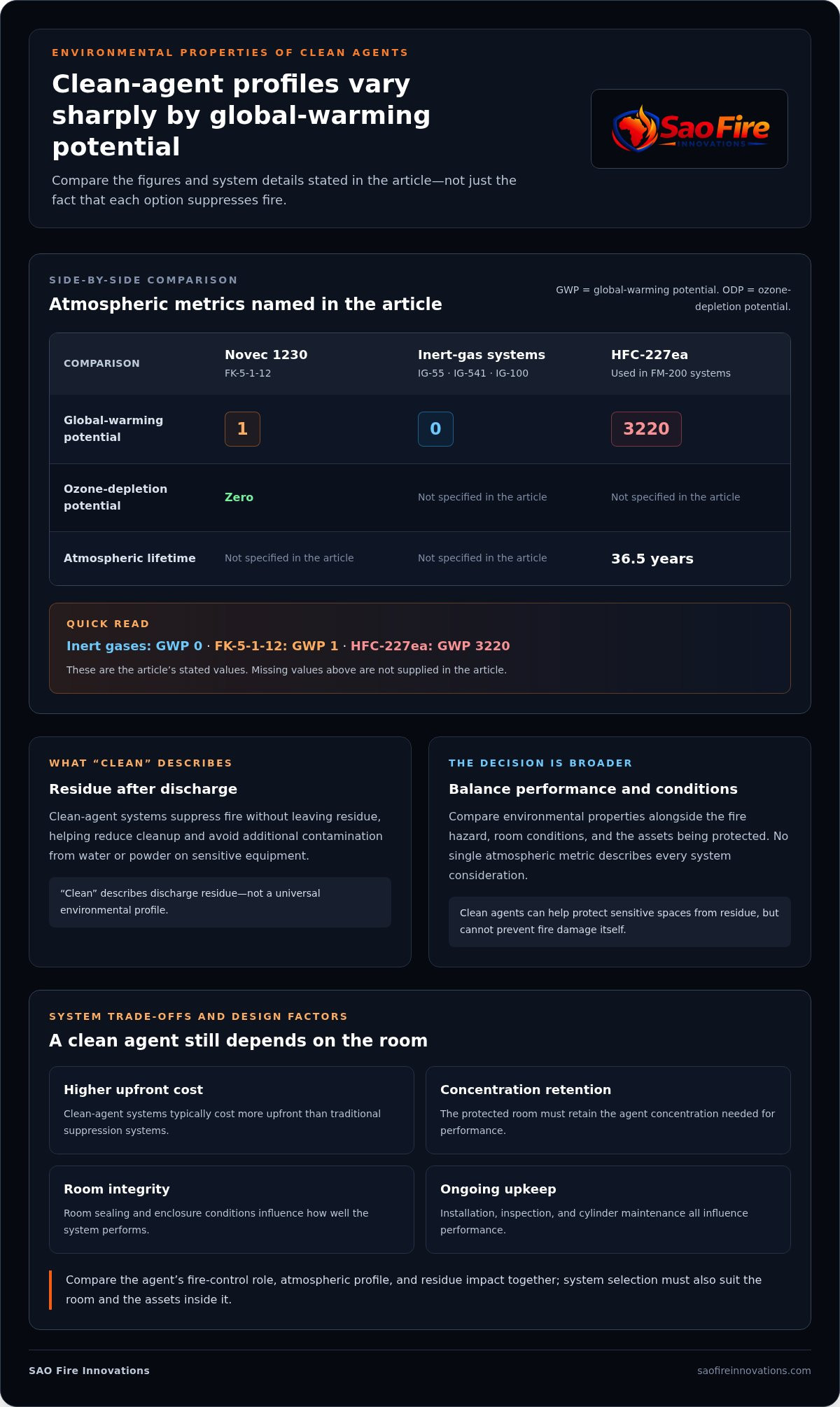
Environmental impact varies by agent, so “clean” describes discharge residue, not a universal environmental profile. Novec 1230, also identified as FK-5-1-12, has zero ozone-depletion potential and a global-warming potential of one. Inert-gas systems, including IG-55, IG-541, and IG-100, have a listed global-warming potential of zero. These distinctions matter when comparing systems for sensitive environments.
Other agents carry different atmospheric profiles. HFC-227ea, used in FM-200 systems, has a global-warming potential of 3220 and an atmospheric lifetime of 36.5 years. By comparison, FK-5-1-12 is listed with zero ozone depletion. Agent selection therefore involves more than fire performance: consider environmental properties, the hazard, room conditions, and the assets being protected.
Each suppression method works differently. Water removes heat but can soak servers, records, or instruments. Foam cools and smothers flammable-liquid fires, while dry chemical agents interrupt combustion. Clean-agent systems suppress fire without leaving residue, helping reduce cleanup and protect sensitive equipment. They cannot prevent fire damage itself; their advantage is avoiding additional contamination from water or powder.
Clean agents suppress fires by absorbing heat or reducing oxygen enough to stop combustion. Some chemical agents interrupt combustion while remaining gaseous, then disperse without coating equipment. In a data room, for example, electronics avoid the water residue associated with sprinklers. Proper detection and system design are still essential to deliver the required concentration throughout the protected space.
There are trade-offs. Clean-agent systems typically cost more upfront than traditional suppression systems, and the protected room must retain agent concentration. Room sealing, installation, inspection, and cylinder maintenance all influence performance. Environmental comparisons also distinguish short-lived FK-5-1-12 from long-lived HFC-227ea. Evaluate the agent’s fire-control mechanism, atmospheric profile, and residue impact together, rather than treating “clean” as a complete environmental rating.
Protection for electronics, art, and musical instruments
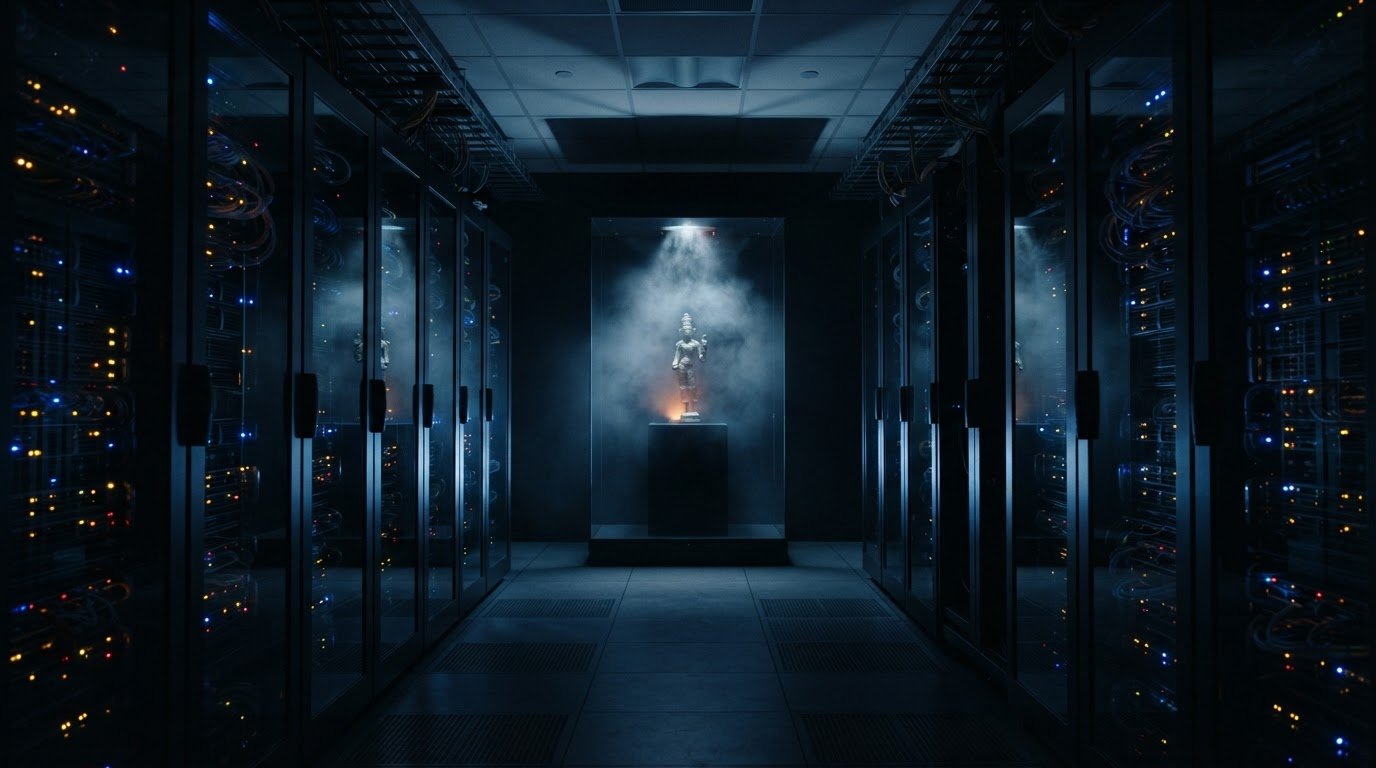
Clean-agent systems can suit spaces where water or powder could worsen fire damage. Common examples include data centers, museum galleries, archives, control rooms, and rooms holding valuable instruments. They suppress fires without leaving residue on equipment or materials, helping protect sensitive electronics and collections.
For electronics, a key benefit is avoiding water damage and conductive residue that can impair circuits. For art and documents, a clean discharge helps limit additional harm to paper, pigments, frames, and storage materials. Moisture or chemical residue may also affect the finishes, wood, and components of musical instruments. Suppression must still control the fire itself, so asset protection depends on matching the agent and system design to the room.
NFPA 232 addresses protection of records, while NFPA 909 covers cultural resource properties. These standards help frame fire safety for archives, libraries, museums, and heritage facilities. Where building codes require water-based sprinklers, a pre-action system or supplemental clean agent system can protect art collections. A pre-action design limits unintended water release, while clean agent protection can address a separately defined sensitive area.
When properly engineered, clean-agent systems can be designed for occupied spaces, with alarms and evacuation procedures supporting people as well as equipment protection. They do not replace life-safety planning or fire-extinguishing requirements. In commercial facilities, a server room or gallery can be protected as a separate zone. In homes, protection choices should reflect room use, occupants, and assets at risk rather than assuming one method suits every space.
Clean-agent suppression is most relevant to buildings or rooms with concentrated, high-value assets and a clear risk from water or residue. A museum archive, an enterprise data room, and a collection of musical instruments each present different hazards. Room enclosure, detection, evacuation planning, and the fire threat help determine whether waterless suppression offers the right balance for people and property.
Novec 1230 fire suppression
Novec 1230 is a clean agent identified chemically as FK-5-1-12. It suppresses fire by absorbing heat and interrupting combustion, then disperses without residue on protected equipment. That profile makes it relevant to control rooms, archives, and industrial spaces containing sensitive or valuable assets.
System performance depends on reaching and holding the designed concentration throughout the enclosure. For example, a 100 m³ room requires approximately 76 kg of FK-5-1-12 to reach a 5.3% concentration. The amount is an engineering example, not a universal design figure. Room volume, hazards, leakage, and the required concentration shape system design.
Installation must account for enclosure integrity. A sealed room helps maintain agent concentration long enough to suppress combustion; openings, cable penetrations, and ventilation can affect retention. Engineers also position discharge nozzles to distribute agent through the protected space. NFPA 2001 provides guidance for engineering clean-agent systems in sensitive, populated spaces.
People and equipment need coordinated protection. Detection and alarms initiate the response, while evacuation procedures give occupants time to leave before discharge. System design should support safe evacuation, not treat asset preservation as the only objective. After discharge, equipment may remain dry, but the space still needs ventilation and inspection before operations resume.
Novec 1230’s environmental profile also informs selection: FK-5-1-12 has zero ozone-depletion potential and a global-warming potential of one. Its clean discharge can reduce residue-related cleanup, but it doesn’t remove the need for inspections, cylinder checks, and enclosure testing. A room that cannot retain the required concentration may not support the intended performance.
The takeaway is specific: Novec 1230 can support fire suppression with minimal asset damage when room integrity, agent quantity, detection, and evacuation work as one design. For organizations evaluating asset continuity, explore total-loss-minimization fire suppression technology as a related protection approach.
SAO Fire Innovations: Total Loss Minimization fire suppression technology
SAO Fire Innovations is developing Total Loss Minimization fire suppression technology for organizations seeking to protect critical assets when fire threatens. Its approach focuses on reducing the wider consequences of a fire, not just suppressing flames. It may interest institutions assessing how fire response affects valuable equipment, operations, and continuity.
Research, prototyping, and testing are underway, and the technology remains in development. For organizations considering how asset preservation should shape future fire-suppression strategy, this is a natural next step after assessing clean-agent performance, environmental impact, and room-specific risks.
To discuss the technology, contact SAO Fire Innovations.
Make asset continuity part of the next decision
Fire protection decisions shape more than the immediate response. They affect how an organization preserves essential operations, safeguards irreplaceable materials, and recovers after disruption. Make asset continuity a design priority: identify which resources must remain functional, what secondary damage could compromise them, and how protection fits the facility’s wider resilience plans.
That perspective gives fire suppression with minimal asset damage a strategic role in planning, not simply a technical specification. SAO Fire Innovations offers Total Loss Minimization fire suppression technology for organizations focused on reducing the wider consequences of fire. Consider how this approach aligns with your preservation objectives and operational priorities.
Contact SAO Fire Innovations to explore the technology and take a considered next step toward stronger asset continuity.
Frequently Asked Questions
How Do You Suppress a Fire?
Suppress a fire by interrupting combustion, using a method suited to the material burning and the space. Water cools ordinary combustible materials, foam can control flammable-liquid fires, and clean agents can protect rooms with sensitive equipment. Detection and alarms alert occupants; trained personnel follow the facility’s emergency plan. If a fire grows or threatens people, evacuate and call emergency services rather than attempting to fight it.
Can I use water-based sprinklers for my art collection?
Yes, water-based sprinklers can protect buildings that house art, and code requirements may call for them. To reduce water exposure to collections, a facility can use a pre-action sprinkler design or add a clean-agent system for a defined gallery or storage room. Collection materials, room layout, and applicable fire requirements shape the arrangement. NFPA 232 and NFPA 909 address records protection and cultural resource properties.
How are specific high-value assets protected from fire?
Start by identifying each asset’s material, function, and role in operations. A server supporting essential services, a framed painting, and a wooden instrument face different threats from heat, smoke, water, and residue. Group assets by protection needs, then consider room separation, detection coverage, and suppression method. Keep an accurate inventory and note which items need specialized handling after an incident.
How can you evaluate a facility’s fire protection?
Assess whether fire protection reflects current hazards, room use, and stored materials. Walk through electrical rooms, archives, and workshops, noting fuel sources, obstructions, and changes to equipment or layout. Review detection, alarms, suppression coverage, inspection records, and maintenance findings. Then compare the system design with applicable codes and operational needs, prioritizing gaps that could threaten occupants or interrupt critical functions.
Why Protect Assets Rather Than Just The Building?
A building can remain standing while its essential contents become unusable. Protecting assets helps preserve operational capability, irreplaceable records, specialized machinery, and cultural materials. Damage to a control unit, for example, may interrupt a process even when surrounding walls remain intact. Planning around asset value and function broadens fire safety beyond structural protection to include continuity, recovery, and preservation of resources that support the organization.
Which fire suppression systems cause the least damage to equipment and property?
Clean-agent systems can limit collateral damage in enclosed spaces containing electronics or other sensitive property because they discharge without residue. They are not suitable for every hazard: water, foam, or dry chemical agents may better match other fire types. For fire suppression with minimal asset damage, weigh the fuel, occupancy, enclosure, and vulnerable contents together. Suitability depends on the specific space and threat.
Frequently Asked Questions
Suppress a fire by interrupting combustion, using a method suited to the material burning and the space. Water cools ordinary combustible materials, foam can control flammable-liquid fires, and clean agents can protect rooms with sensitive equipment. Detection and alarms alert occupants; trained personnel follow the facility’s emergency plan. If a fire grows or threatens people, evacuate and call emergency services rather than attempting to fight it.
Yes, water-based sprinklers can protect buildings that house art, and code requirements may call for them. To reduce water exposure to collections, a facility can use a pre-action sprinkler design or add a clean-agent system for a defined gallery or storage room. Collection materials, room layout, and applicable fire requirements shape the arrangement. NFPA 232 and NFPA 909 address records protection and cultural resource properties.
Start by identifying each asset’s material, function, and role in operations. A server supporting essential services, a framed painting, and a wooden instrument face different threats from heat, smoke, water, and residue. Group assets by protection needs, then consider room separation, detection coverage, and suppression method. Keep an accurate inventory and note which items need specialized handling after an incident.
Assess whether fire protection reflects current hazards, room use, and stored materials. Walk through electrical rooms, archives, and workshops, noting fuel sources, obstructions, and changes to equipment or layout. Review detection, alarms, suppression coverage, inspection records, and maintenance findings. Then compare the system design with applicable codes and operational needs, prioritizing gaps that could threaten occupants or interrupt critical functions.
A building can remain standing while its essential contents become unusable. Protecting assets helps preserve operational capability, irreplaceable records, specialized machinery, and cultural materials. Damage to a control unit, for example, may interrupt a process even when surrounding walls remain intact. Planning around asset value and function broadens fire safety beyond structural protection to include continuity, recovery, and preservation of resources that support the organization.
Clean-agent systems can limit collateral damage in enclosed spaces containing electronics or other sensitive property because they discharge without residue. They are not suitable for every hazard: water, foam, or dry chemical agents may better match other fire types. For fire suppression with minimal asset damage, weigh the fuel, occupancy, enclosure, and vulnerable contents together. Suitability depends on the specific space and threat.