Fire Suppression for High-Value Assets: Choosing a System
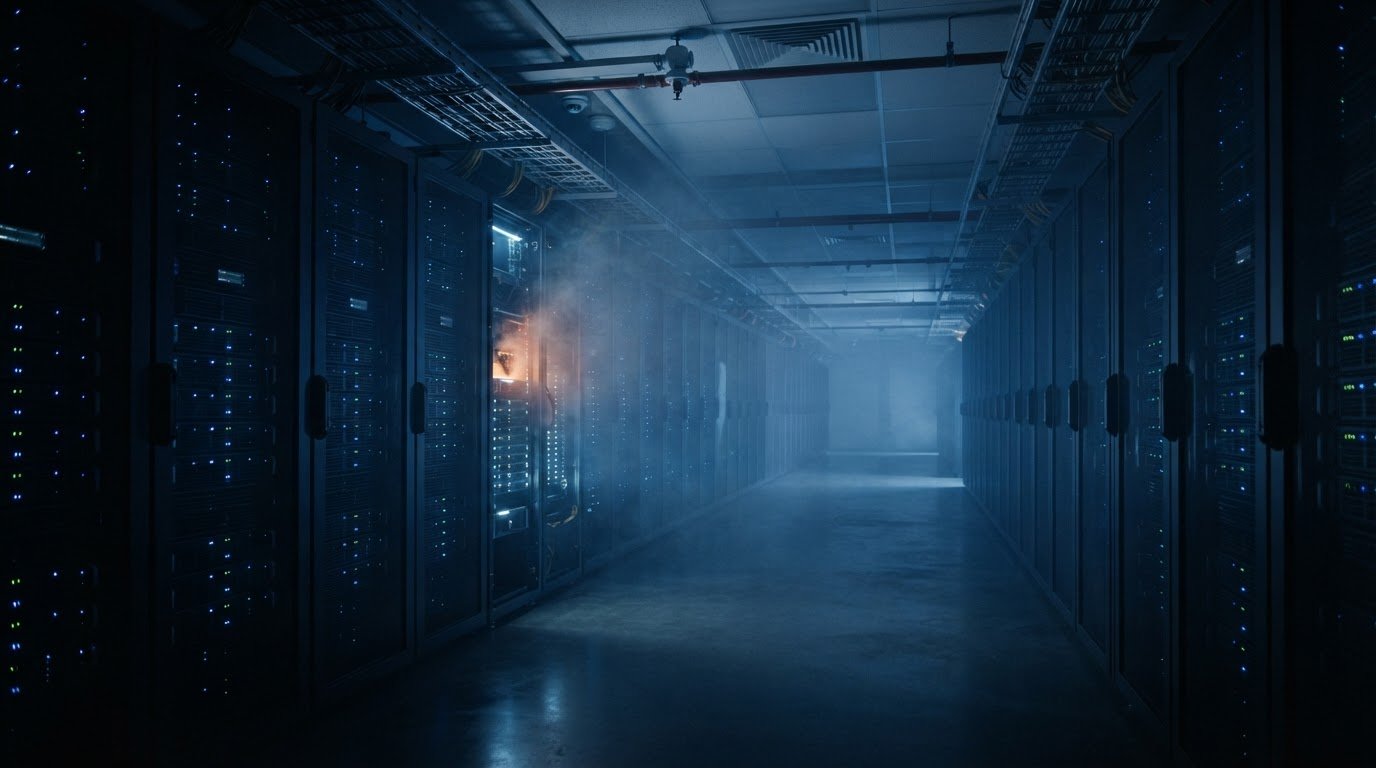
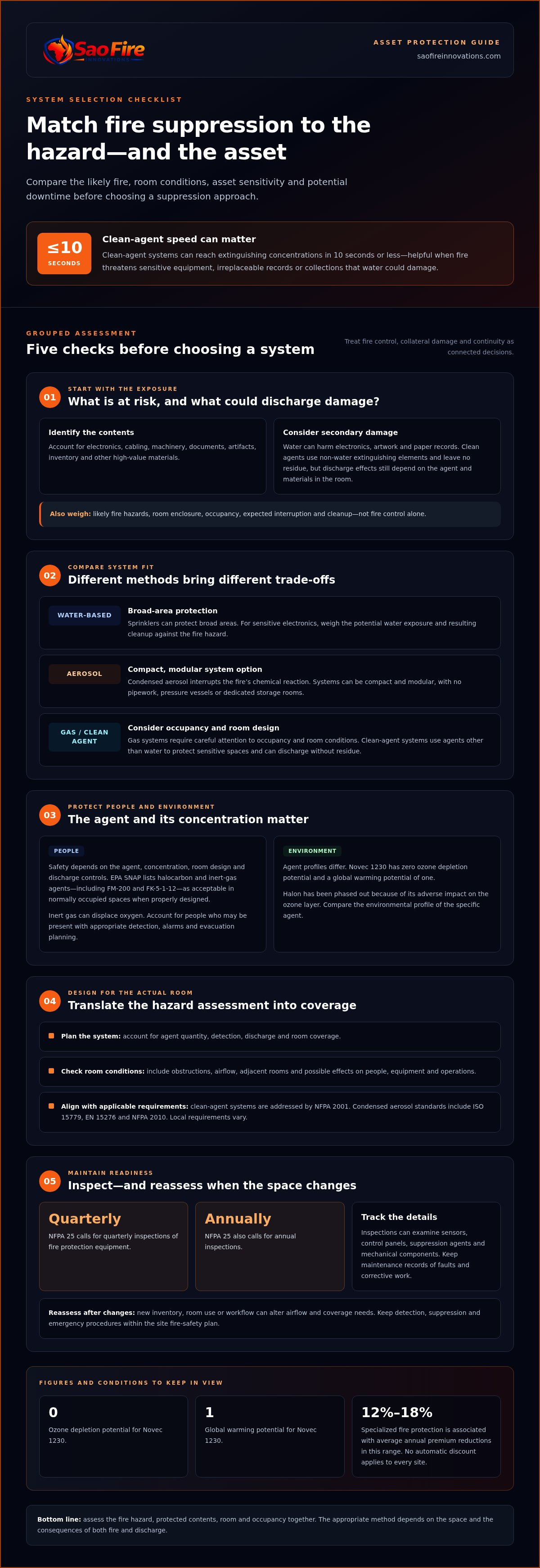
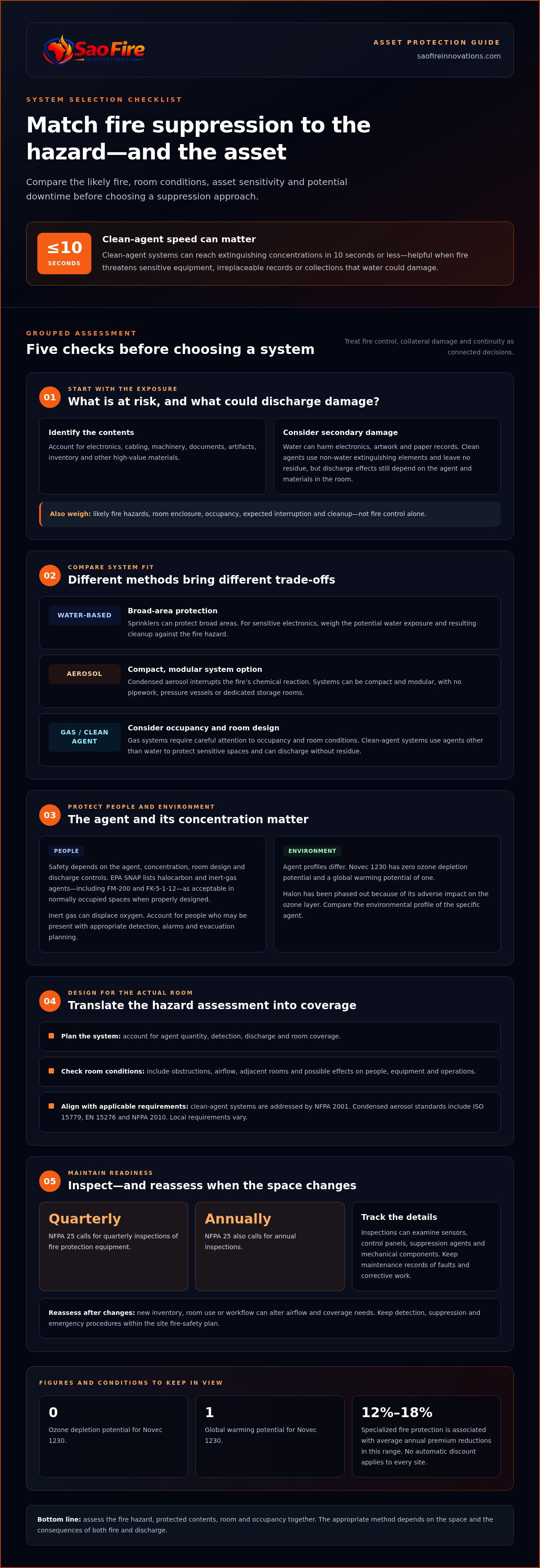
Clean-agent systems can reach extinguishing concentrations in 10 seconds or less. That speed matters when fire threatens sensitive equipment, irreplaceable records, or a collection that water could damage. Effective fire suppression for high-value assets depends not only on how quickly a system acts, but also on how its agent affects the protected space and the people and materials inside it.
Protecting valuable assets means considering more than the immediate threat of flames. Water may control a fire but damage electronics or artworks. Gas and aerosol systems offer alternatives, each with distinct design requirements for the space and assets being protected.
This article explains how clean-agent suppression works and compares aerosol, gas, and water-based systems. It also covers key considerations for protecting technical rooms and art collections, helping you assess which system characteristics matter before making a decision.
Key Takeaways
- Compare clean agents, aerosol, gas, and water by the hazards in the space and the potential for collateral damage.
- Assess technical rooms for sensitive equipment, room conditions, and how suppression could affect continued operations.
- Balance fire control with collection preservation when evaluating sprinklers and other options for artwork.
- Explore how SAO Fire Innovations’ Total Loss Minimization technology fits a broader strategy for protecting high-value assets.
What are the benefits of clean agent fire suppression?
NFPA 2001 identifies a standard for clean-agent systems. These specialized suppression systems use agents other than water to protect sensitive spaces.
Protection for Sensitive and High-Value Assets
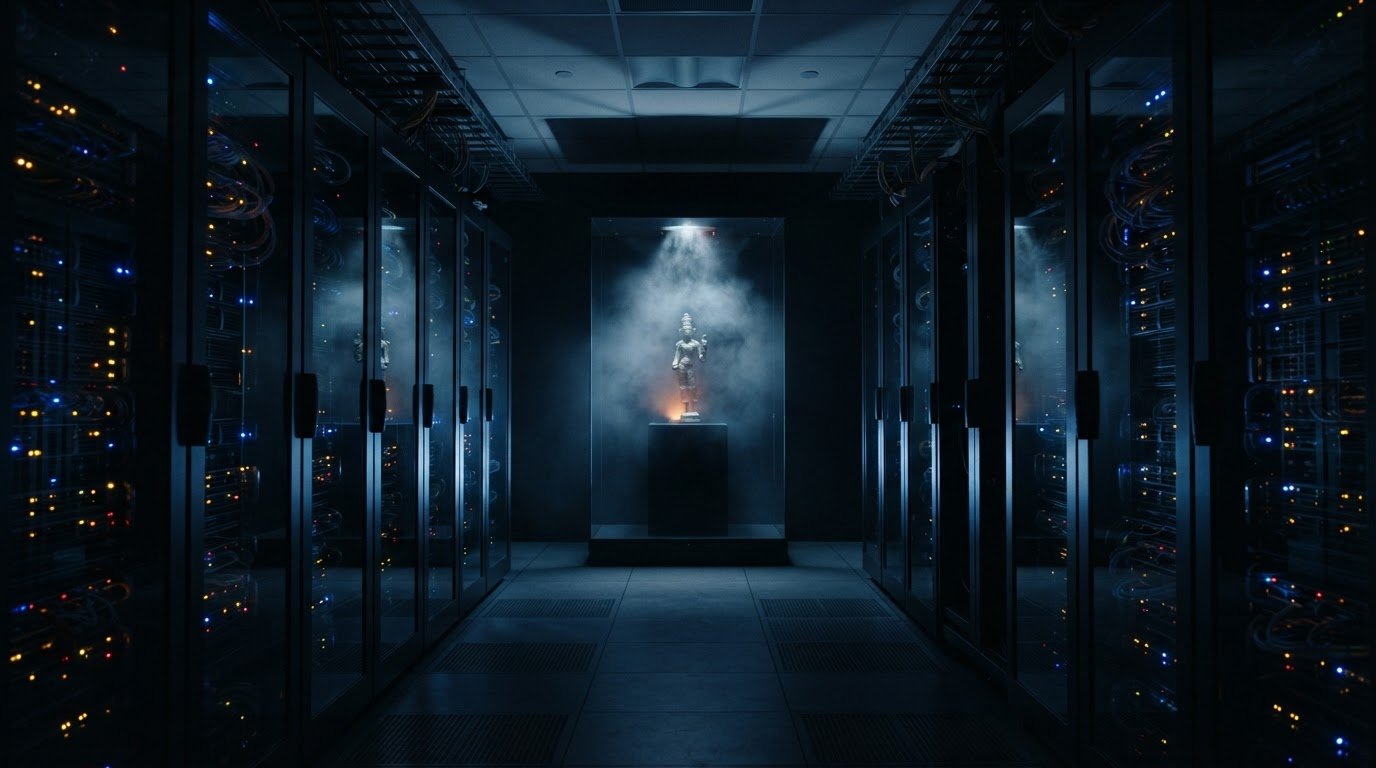
Clean-agent suppression controls fire without soaking equipment, documents, or artifacts. That distinction matters in server rooms and museums, where water can damage valuable assets even after flames stop. These systems can reach extinguishing concentrations in 10 seconds or less, helping address a developing fire quickly. Their residue-free discharge also avoids the cleanup burden associated with powders or water, supporting the preservation of sensitive contents.
Environmental Effects of Suppression Agents
Environmental impact differs by agent, so the chemical matters as much as the system type. Novec 1230 has zero ozone depletion potential and a global warming potential of one. Halon, by contrast, has been phased out because of its adverse impact on the ozone layer. Comparing agent profiles helps organizations weigh fire control against environmental persistence when selecting specialized protection for a collection or technical space.
Human and Environmental Safety
Occupant safety depends on the agent, concentration, room design, and discharge controls. EPA SNAP lists halocarbon and inert-gas agents, including FM-200 and FK-5-1-12, as acceptable in normally occupied spaces when properly designed. Inert gas can displace oxygen, so system design must account for people who may be present. Detection, alarms, evacuation planning, and appropriate agent selection form part of a responsible protection strategy.
Insurance Considerations and Specialized Needs
Insurers may set protection conditions through policy terms, but requirements depend on the property and coverage. Specialized fire protection is associated with average premium reductions of 12% to 18% annually. No automatic discount applies to every site. Electronics, records, artifacts, and other irreplaceable contents may need protection that limits collateral damage as well as fire spread. Assess the asset, room enclosure, occupancy, and likely fire hazards together.
How Does Aerosol Compare to Gas and Water Systems?
The right system depends on the likely fire, room conditions, asset sensitivity, and potential downtime. Assess these factors together to match the suppression method to both the hazard and the environment.
Selecting Systems for Hazards and Downtime
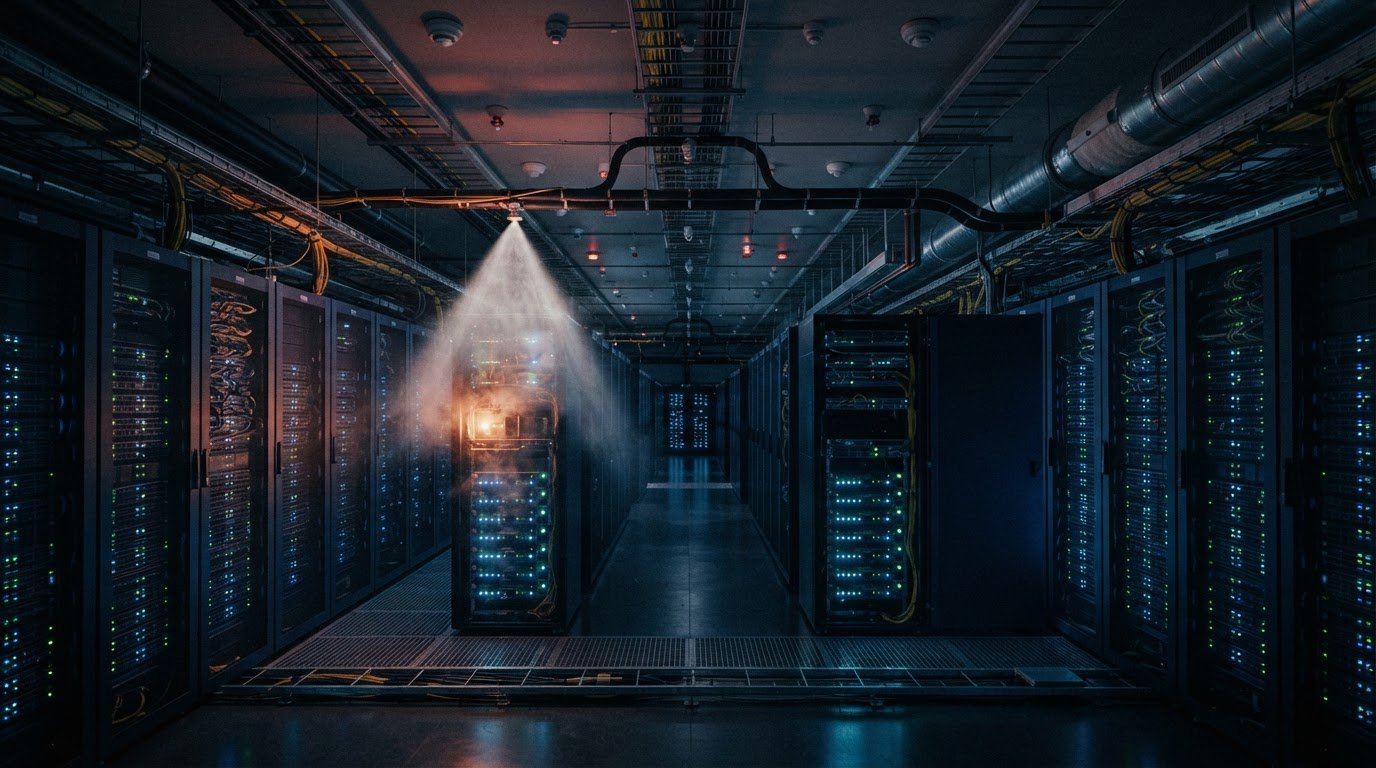
System selection means matching the suppression method to the fuel, enclosure, and consequences of discharge. Sprinklers can protect broad areas, while sensitive electronics may need an approach that limits water exposure. Condensed aerosol systems are compact and modular, with no pipework, pressure vessels, or dedicated storage rooms. Gas systems require careful attention to occupancy and room design. Compare expected interruption and cleanup as well as fire control.
System Design and Installation
Design translates a hazard assessment into agent quantity, detection, discharge, and room coverage. Condensed aerosol interrupts the fire’s chemical reaction; standards include ISO 15779, EN 15276, and NFPA 2010. Local requirements vary, so the system must align with applicable codes and the protected space. Installation should account for obstructions, airflow, adjacent rooms, and how discharge could affect people, equipment, and operations.
Testing and maintenance preserve system readiness. NFPA 25 calls for quarterly and annual inspections of fire protection equipment. Inspections can examine sensors, control panels, suppression agents, and mechanical components. Functional testing should follow applicable NFPA requirements; maintenance records help track faults and corrective work. Include related fire safety assets in the site plan, since detection, suppression, and emergency procedures work together to limit spread.
Reassess the choice when inventory, room use, or workflow changes. A server room with expanding equipment, for example, may have different airflow and coverage needs after a layout change. Compare the fire hazard, the asset’s tolerance for water or chemical discharge, and the downtime associated with cleanup. For a broader asset-continuity perspective, explore fire suppression innovation.
Fire protection for motor control centers and technical rooms
Motor control centers concentrate electrical equipment, while server rooms combine electronics, cabling, and continuous operational demands. Clean-agent systems serve technical rooms, laboratories, and medical facilities, where suppression choices must account for equipment sensitivity and downtime. NFPA 909 addresses cultural resource properties, making it relevant when fire protection planning includes collections or archives.
The cost of protecting a data center, museum, or archive depends on the protected area, hazards, system design, equipment, and installation requirements. A project quote should account for these factors, including room layout, detection, and the chosen suppression approach.
Suppression can cause secondary damage even when it extinguishes a fire. Water can harm electronics, artwork, and paper records. Clean agents use non-water extinguishing elements and leave no residue, but the impact of any discharge depends on the agent and the materials in the room. For machinery, consider both fire exposure and the possible effects of the selected agent.
Retail and e-commerce operations may need to protect point-of-sale equipment, network hardware, and stored inventory. Pharmaceutical environments and medical-device spaces add sensitive equipment and valuable materials to the assessment. Museums and archives must consider documents and artifacts alongside building protection. NFPA 232 covers the protection of records, while NFPA 909 addresses cultural resource properties. These standards help frame protection planning for records and collections.
Early detection can help address a fire before it spreads through server racks or motor-control equipment. Integrated detection can trigger clean-agent discharge within seconds, directing suppression to the protected enclosure. Design should account for rack arrangement, concealed spaces, airflow, and equipment access, all of which affect how detection and suppression reach a developing fire. In a server room, map equipment zones and identify where smoke could accumulate before selecting coverage. Align these decisions with continuity plans, including evacuation procedures and the potential for operational downtime.
Can I use water-based sprinklers for my art collection?
Water-based sprinklers can protect a building, but discharge may also damage paintings, frames, paper, and display cases. A traditional sprinkler head releases approximately 25 gallons of water per minute when it activates. NFPA 13 is a standard for sprinkler systems. For an art collection, weigh the building’s fire-protection needs against the materials, display conditions, and likely water exposure.
Plan protection around both the collection and the facility. Map artwork, storage areas, ceilings, and sprinkler coverage, then consider how water could travel across floors or enter display cases. A server room or archive in the same building may have different risks and need a separate assessment. Clean agents offer a non-water approach for sensitive spaces, but the suitable system depends on the hazards and applicable local requirements.
Maintenance protects system readiness and collection records. NFPA 25 calls for quarterly and annual inspections of fire protection equipment. Inspections can examine sensors, control panels, suppression agents, and mechanical components. OSHA requires employers to self-inspect fire safety assets monthly and have a trained technician perform an annual maintenance check with documentation. Record inspection findings, repairs, and changes to room use in the facility’s fire-safety files.
Keep asset information current as collections move or change. Fire-safety asset QR codes can provide a no-login link to profiles with manuals, expiration dates, and product numbers. Attach relevant records to each protection asset and update them after maintenance or a layout change. If a painting moves into storage, revise its location and related protection records together.
Build a routine around the equipment and the collection: preserve inspection documentation, track system changes, and schedule functional testing under applicable requirements. Clear records help staff identify the equipment protecting each room and its maintenance history. To explore asset-focused fire suppression technology, consider how total-loss reduction fits your collection’s protection priorities.
SAO Fire Innovations: Total Loss Minimization fire suppression technology
SAO Fire Innovations is developing Total Loss Minimization fire suppression technology for organizations seeking to limit losses when fire threatens valuable assets. The approach considers more than extinguishing flames, including how suppression choices affect equipment, collections, records, and operational continuity. It is relevant to organizations assessing protection for sensitive spaces and weighing fire damage against potential damage from suppression.
The technology is in development, with research, prototyping, and testing underway. Organizations considering future approaches to asset protection can follow this work as part of their broader fire-risk planning.
Contact SAO Fire Innovations to discuss Total Loss Minimization fire suppression technology.
Make Asset Continuity the Next Decision
Protective planning should start with the consequences of loss, not just the presence of fire. Identify which assets support essential operations, preserve institutional knowledge, or hold cultural value, then assess how much disruption their loss could cause. This gives fire suppression for high-value assets a clear strategic purpose: protecting continuity as well as property.
SAO Fire Innovations is developing Total Loss Minimization fire suppression technology to minimize total loss when fire threatens. Research, prototyping, and testing are underway. For organizations shaping a long-term protection strategy, this work connects suppression decisions with the broader goal of preserving assets and operational resilience.
Consider how total-loss minimization fits your organization’s priorities and protection planning. Contact SAO Fire Innovations to continue the conversation. A deliberate next step can help place asset preservation at the center of your fire-protection strategy.
Frequently Asked Questions
How fast does a clean agent system work?
Clean-agent systems can reach extinguishing concentrations in 10 seconds or less. That figure describes the agent concentration, not necessarily the entire interval from fire detection to discharge. Detection, control logic, pre-discharge alerts, and room conditions also shape the response sequence. For a server room, review how detection and discharge procedures coordinate with staff evacuation and equipment shutdown.
How often should fire suppression systems be inspected?
According to NFPA 25, fire protection equipment requires quarterly and annual inspections. Inspection schedules also depend on equipment type and applicable local requirements. Track completed inspections, defects, corrective work, and system changes in a central record. After maintenance or a room-layout change, confirm that the system’s documentation reflects the equipment and protected areas now in place.
Are hybrid systems safe for occupied spaces?
Occupant safety depends on the agents used in a hybrid system, its design and discharge conditions, and how the room is used. Inert gas systems can displace oxygen, so occupancy is a key design consideration. Assess who may be present, how they will receive a warning, and how they can exit before discharge. Clear response procedures and system-specific safeguards help teams manage activation risks.
How are specific high-value assets protected from fire?
For fire suppression for high value assets, map each item to its fire exposure and tolerance for suppression effects. A data center may prioritize equipment enclosures and continuity; a museum may focus on collection locations and water exposure. An archive needs records organized by storage area and protection zone. This inventory helps align detection, coverage, and response plans with the vulnerabilities of each asset.
How can you evaluate a facility’s fire protection?
Start with a current inventory of protected assets, hazards, room uses, and system records. Review how changes to storage, workflows, or equipment affect fire risk and coverage. Examine inspection findings, maintenance records, detection and control interfaces, and staff response procedures. Routine emergency drills help personnel understand how to respond, while reassessments keep plans aligned with changes to the facility.
What fire suppression systems are best for protecting high-value assets?
The right approach to fire suppression for high value assets depends on the likely fire, enclosure, occupancy, local requirements, and potential collateral damage. Water-based sprinklers can protect broad spaces, while clean agents may suit sensitive equipment or collections. Aerosol systems are another option for specific applications. Compare operational disruption and maintenance needs alongside extinguishing performance before selecting protection.
Frequently Asked Questions
Clean-agent systems can reach extinguishing concentrations in 10 seconds or less. That figure describes the agent concentration, not necessarily the entire interval from fire detection to discharge. Detection, control logic, pre-discharge alerts, and room conditions also shape the response sequence. For a server room, review how detection and discharge procedures coordinate with staff evacuation and equipment shutdown.
According to NFPA 25, fire protection equipment requires quarterly and annual inspections. Inspection schedules also depend on equipment type and applicable local requirements. Track completed inspections, defects, corrective work, and system changes in a central record. After maintenance or a room-layout change, confirm that the system’s documentation reflects the equipment and protected areas now in place.
Occupant safety depends on the agents used in a hybrid system, its design and discharge conditions, and how the room is used. Inert gas systems can displace oxygen, so occupancy is a key design consideration. Assess who may be present, how they will receive a warning, and how they can exit before discharge. Clear response procedures and system-specific safeguards help teams manage activation risks.
For fire suppression for high value assets, map each item to its fire exposure and tolerance for suppression effects. A data center may prioritize equipment enclosures and continuity; a museum may focus on collection locations and water exposure. An archive needs records organized by storage area and protection zone. This inventory helps align detection, coverage, and response plans with the vulnerabilities of each asset.
Start with a current inventory of protected assets, hazards, room uses, and system records. Review how changes to storage, workflows, or equipment affect fire risk and coverage. Examine inspection findings, maintenance records, detection and control interfaces, and staff response procedures. Routine emergency drills help personnel understand how to respond, while reassessments keep plans aligned with changes to the facility.
The right approach to fire suppression for high value assets depends on the likely fire, enclosure, occupancy, local requirements, and potential collateral damage. Water-based sprinklers can protect broad spaces, while clean agents may suit sensitive equipment or collections. Aerosol systems are another option for specific applications. Compare operational disruption and maintenance needs alongside extinguishing performance before selecting protection.